



Stakeholders and advocates have called for a shift in disability inclusion from mere compliance and symbolic representation to genuine influence and participation in decision-making processes.
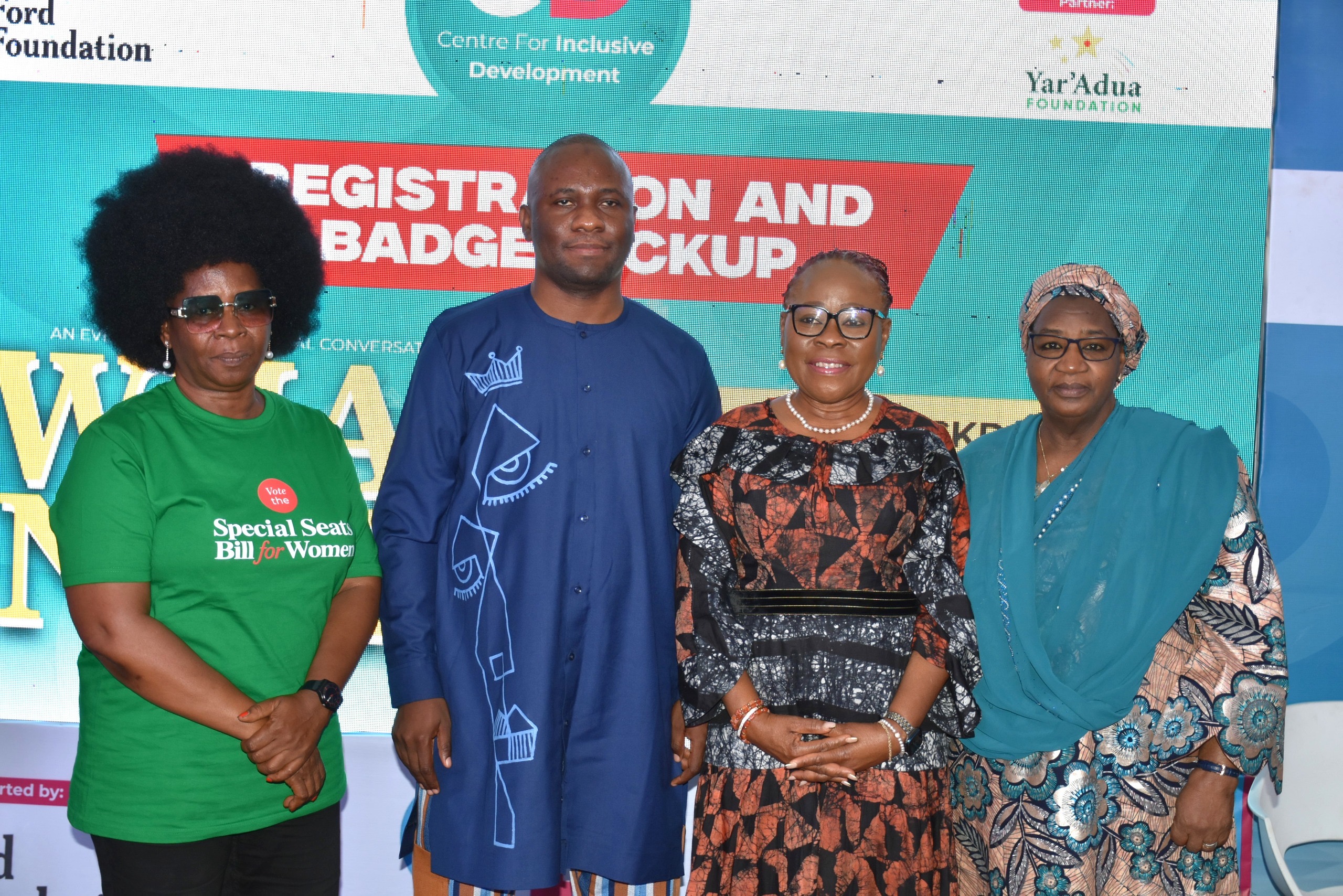
The call was made during a stakeholder engagement convened by the Center for Inclusive Development (CID).
The event brought together disability rights advocates, gender justice leaders, and development practitioners to reimagine disability inclusion beyond symbolic representation and compliance requirements.
The discourse featured the inaugural edition of “What Next – An Evening of Intersectional Conversations”, which brought together civil society actors, private sector representatives, funders, and researchers to examine how strategies from the gender movement could inform more effective approaches to disability inclusion.
A major highlight of the event was the presentation of CID’s research on gender-based violence against women with disabilities in Nigeria.
The report provides important evidence on the intersecting vulnerabilities faced by women with disabilities and the urgent need for targeted interventions.
Dr. ChiChi Aniagolu-Okoye, Regional Director for West Africa at the Ford Foundation, who delivered the keynote address, provided a critique of prevailing approaches to disability inclusion in Nigeria.
“Check-boxing inclusion gives visibility without power, presence without influence, and acknowledgement without justice,” Dr. Aniagolu-Okoye said.
She emphasized that disability inclusion must be understood as a structural issue embedded within systems of power, policy, and social norms, rather than a procedural obligation.
Dr. Aniagolu-Okoye highlighted the relevance of intersectionality, noting that women and girls with disabilities experience layered forms of exclusion that cannot be addressed through single-issue approaches.
Dr. ChiChi Aniagolu-Okoye, Regional Director for West Africa at the Ford Foundation, delivering her keynote address
“A woman with disability is not simply a woman and a disabled person; multiple, intersecting forms of discrimination shape her experiences,” she said.
She also outlined several strategic shifts from the gender movement relevant to disability advocacy, including the transition from isolated programming to mainstream inclusion across policies and institutions, the centrality of lived experience in shaping advocacy narratives, and the importance of evidence and research in informing policy and funding decisions.
“Inclusion is not about being invited into the room, but about having the power to shape decisions,” Dr. Aniagolu-Okoye concluded.
CID’s research on gender-based violence against women with disabilities stressed the keynote’s emphasis on evidence-driven advocacy, providing data on the experiences of women with disabilities in Nigeria and informing the event’s discussions on intersectional approaches to inclusion.
A panel discussion moderated by Rasak Adekoya featured Haj Saudatu Mahdi of the Women’s Rights Advancement and Protection Alternative (WRAPA), Esther Akinnukawe of MTN Nigeria, and Ene Obi, a human rights activist and former Country Director of ActionAid Nigeria.
Mahdi harped on movement-building principles drawn from feminist organizing, emphasizing the importance of framing disability as a collective constituency capable of political action.
“Disability should be seen as a constituency, not just a label,” Mahdi said, arguing that this framing shifts engagement away from charity and toward rights and accountability.
She reflected on the evolution of the women’s movement, noting that progress was achieved when diverse groups of women recognized themselves as part of a shared struggle.
“Movement building starts with belonging—understanding who we are and how we want to be seen,” Mahdi said.
Akinnukawe provided insights from the private sector, drawing parallels between gender inclusion in corporate environments and current disability inclusion efforts.
“When gender inclusion started, it was largely about compliance, and that was necessary at the time,” Akinnukawe said.
She observed that once women entered leadership and professional spaces, their performance strengthened the case for inclusion.
“When women came in, they demonstrated value, and organizations began to see the business case,” she said, suggesting that disability inclusion is likely to follow a similar trajectory.
Obi’s contribution centered on accountability and the practical application of legal and institutional frameworks.
“Having a law or a commission is not the same as using it; the question is how it is held accountable,” Obi said.
She stressed that disability advocacy should be integrated into broader struggles for rights and justice, as isolation weakens political influence.
She also highlighted the importance of expanding leadership within movements, cautioning against depending on a small number of visible advocates.
“One person cannot make a movement,” Obi said, emphasizing the need for intentional leadership development and internal accountability.
The event was facilitated by Esther Hadiza Ihejeaku and brought together diverse stakeholders to explore cross-movement learning and collaboration.
CID identified a persistent challenge within Nigeria’s civic and development landscape where disability inclusion is often treated as a compliance obligation rather than a structural and rights-based imperative.
The What Next series was designed to create intentional space for learning across movements, elevate evidence and lived experience, and generate insights that can inform policy, programming, and partnerships.
The discussions emphasized the need to move disability inclusion from symbolic representation to influence and decision-making power, with intersectionality emerging as a central framework for understanding and addressing exclusion, particularly for women with disabilities.
The CID research presentation on GBV against women with disabilities provided the evidence base that reinforced the event’s central message about the importance of data-driven advocacy and the need to address the specific vulnerabilities faced by women with disabilities in Nigeria.