


The Conflict Research Network West Africa (CORN West Africa) has successfully convened a high-level User Engagement Dialogue and Peace Actors Networking Forum on its digital peace data platform, the Nigeria Peace Web (NPW).
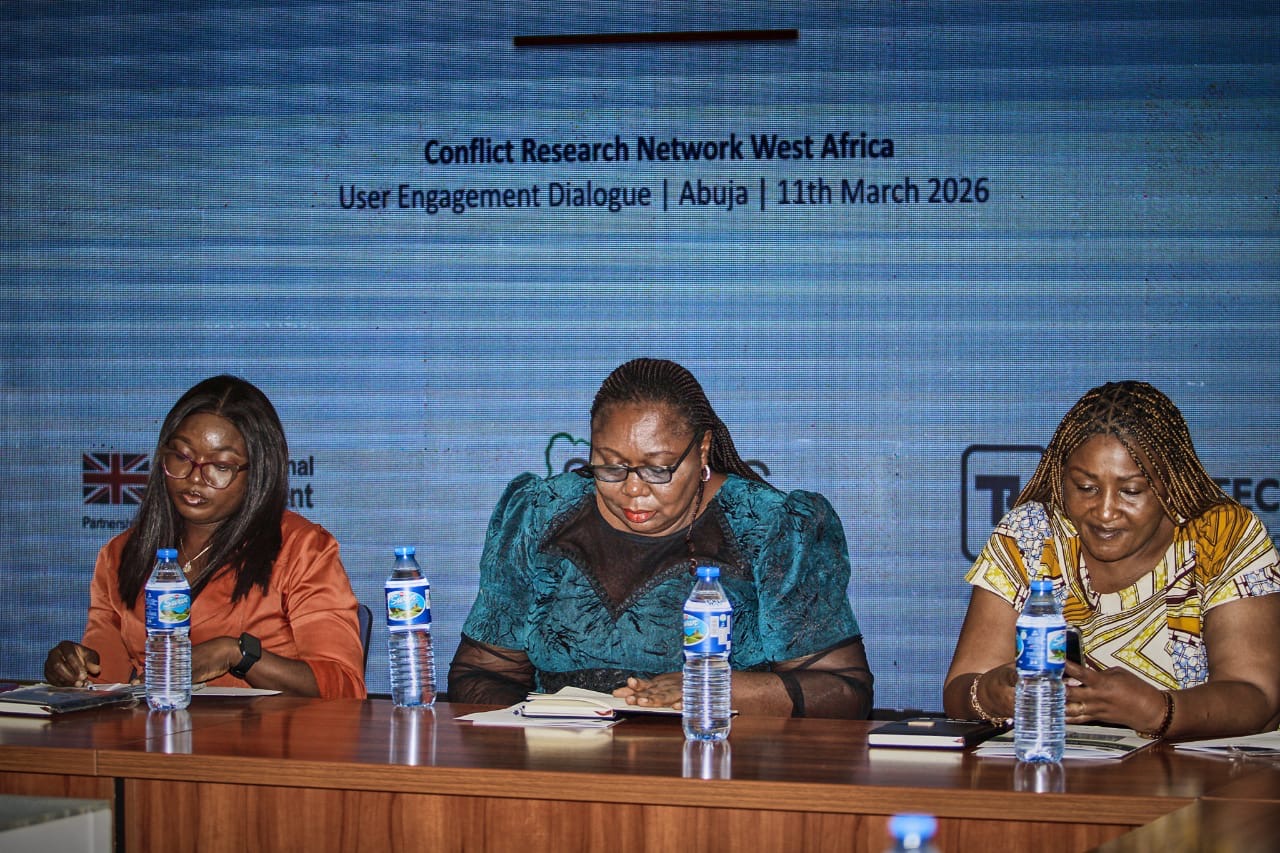
The dialogue, held on Wednesday, March 11, 2026, at the Shehu Musa Yar’Adua Foundation Centre, brought together peacebuilding practitioners, policymakers, researchers, and development partners to strengthen the documentation and visibility of peacebuilding efforts across Nigeria.
Attended by leading actors and scholars in the Nigerian Peace building ecosystem, the convergence served as an interactive platform for stakeholders to review, test, and provide feedback on the Nigeria Peace Web, a digital initiative designed to map peace actors, peace initiatives, and peace-related events across the country.
In his opening remarks, the Executive Director of CORN West Africa, Dr Timipere Felix Allison, noted that while Nigeria’s conflict landscape is widely documented and analysed, the country’s peace landscape remains largely invisible in research, policy discussions, and public discourse.
“Violent incidents, armed actors, and insecurity trends are routinely tracked through global monitoring systems. However, the same cannot be said of the peace landscape,” Dr Allison said. “Across Nigeria, community mediators, faith leaders, traditional authorities, women’s networks, youth groups, and civil society organisations work every day to prevent violence and manage tensions. Yet much of that work remains undocumented, disconnected, and largely invisible.”
Dr Allison explained that the Nigeria Peace Web was developed to address this imbalance by creating an open-source digital platform that aggregates structured data on peace actors, initiatives, and peace events. The platform aims to make peace efforts visible, searchable, and analytically useful for policymakers, researchers, development partners, and practitioners.
The platform is being developed under the Nigeria Peace Actors and Initiatives in Data (NPAID) project, with funding from the UK Government through the Foreign, Commonwealth and Development Office under the Strengthening Peace and Resilience in Nigeria (SPRiNG) Programme implemented by Tetra Tech International Development.
Participants at the dialogue included representatives of civil society organisations, peacebuilding practitioners, research institutions, government policymakers, state peacebuilding commissions, members of the diplomatic community, and development partners.
The engagement generated extensive feedback on the design and future development of the platform.
Stakeholders broadly welcomed the initiative as a potentially transformative tool for strengthening coordination, knowledge sharing, and evidence-based peacebuilding in Nigeria.
Among the key issues raised during the dialogue was the need to establish clearer definitions and classification criteria for what constitutes “peace activities.” Participants noted that peacebuilding interventions may range from mediation, dialogue platforms, reconciliation initiatives, and peace education to community development projects that help reduce tensions and prevent conflict.
Stakeholders also emphasised the importance of strengthening data verification systems on the platform to ensure credibility and reliability. Suggestions included adopting transparent verification methodologies, multi-source validation processes, and moderation structures that ensure quality control for uploaded data.
Another major theme was the need to capture grassroots peacebuilding efforts that often occur informally at the community level.
Participants highlighted the critical roles played by traditional leaders, religious institutions, youth groups, and informal mediators, many of whose activities currently remain undocumented due to limited digital visibility.
To address this, stakeholders recommended incorporating community-level reporting mechanisms, enabling offline documentation to be uploaded, and ensuring that the platform reflects both formal and informal peace actors.
Participants also welcomed the concept of the Nigeria Peace Web as a national knowledge hub for peacebuilding. By providing a centralised repository of peace initiatives across the country, the platform could help organisations identify who is working where, avoid duplication of efforts, and identify gaps where interventions are most needed.
Other recommendations included establishing structured onboarding processes for contributors, defining user roles and permissions on the platform, introducing community feedback and reporting mechanisms to maintain data integrity, and expanding the range of documentation formats to include reports, images, and multimedia evidence of peace activities.
Stakeholders further noted that a national peace data platform could significantly enhance policy development and strategic planning in the peacebuilding sector. By systematically mapping peace actors and interventions, the platform could support evidence-based policymaking and help donors identify priority areas for funding and collaboration.
Participants also highlighted the importance of linking the platform to broader capacity-building initiatives, including training journalists and writers on peace journalism to promote balanced narratives that highlight peace efforts alongside conflict reporting.
CORN West Africa welcomed the constructive feedback and reiterated that the Nigeria Peace Web remains an evolving platform that will continue to be refined in partnership with stakeholders.
CORN West Africa’s Head of Programme, Omolara Raji, expressed appreciation to participants for their engagement and willingness to serve as early users and collaborators in strengthening the platform.
“If the Nigeria Peace Web is to succeed, it will be because peace actors across Nigeria choose to use it, shape it, and own it,” she said.
“Our collective goal is to move from fragmented, episodic peace interventions toward coordinated prevention and cumulative learning, so that peace becomes as visible, measurable, and strategically supported as conflict has long been.”
The Nigeria Peace Web is currently being piloted in Plateau, Kaduna, and Katsina States, with plans for eventual expansion across all 36 states of Nigeria.
CORN West Africa emphasised that strengthening the documentation and visibility of peace initiatives is essential for building more coordinated, evidence-based, and sustainable peacebuilding efforts across the country.