



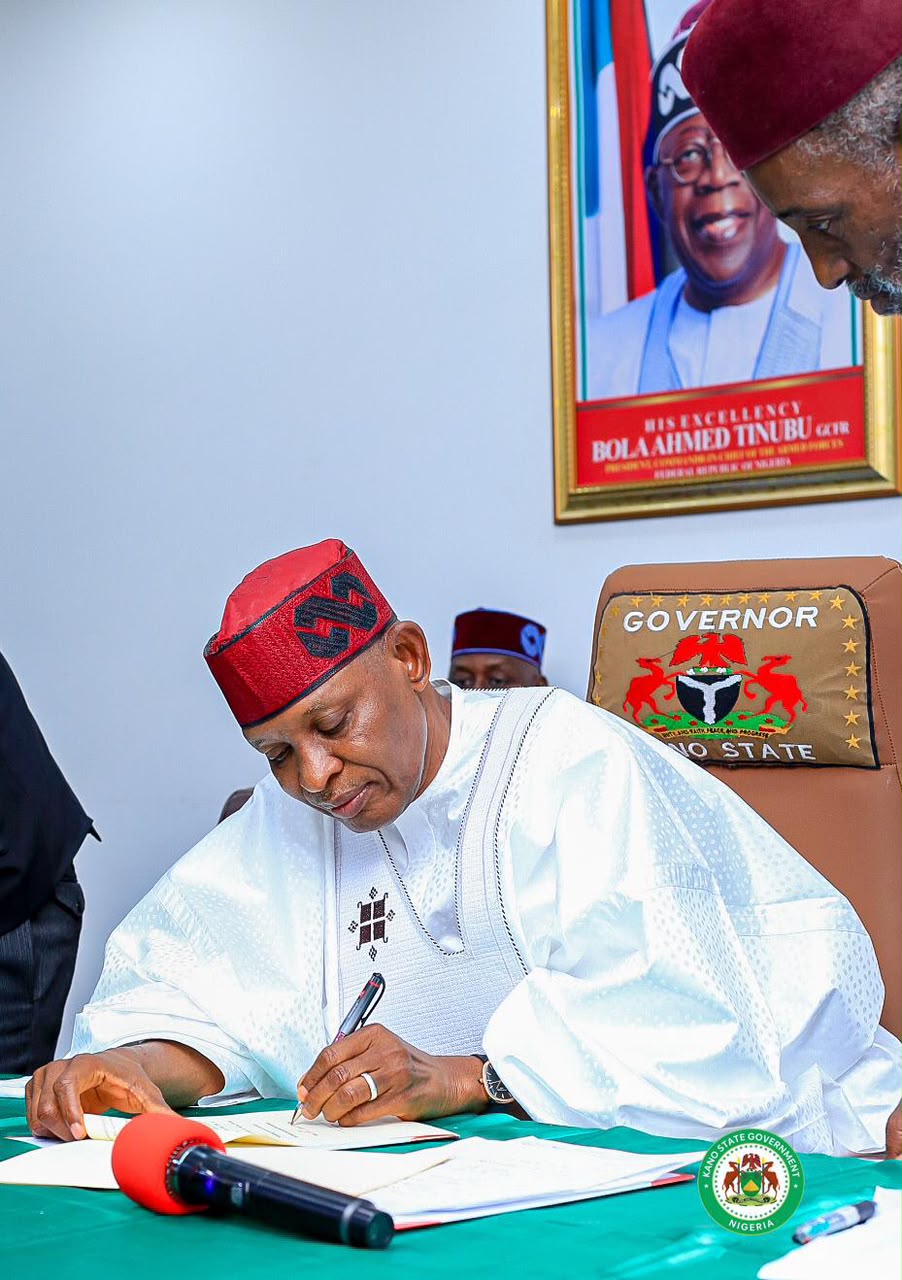
Great leadership does not emerge overnight. It is built over time through character, commitment and consistent service to the people. For supporters of Governor Abba Kabir Yusuf, his leadership journey in Kano State represents the product of years of public service and administrative experience.
Long before becoming governor, Yusuf served in various capacities, including as a technocrat and Commissioner for Works, while working under former Kano State Governor, Senator Rabiu Musa Kwankwaso. Those experiences, his supporters argue, helped shape his understanding of governance and public administration.
Governor Yusuf has consistently presented public service as an opportunity to serve rather than a platform for personal gain. His administration has focused on infrastructure, education, urban renewal and interventions across communities in Kano State.
Among the projects and programmes associated with the administration are urban renewal initiatives in Kano metropolis, road projects, educational infrastructure, salary and pension-related measures and interventions aimed at supporting students and young people.
Supporters of the governor point to these initiatives as evidence of an administration focused on service delivery. Others, particularly political opponents, have challenged aspects of the government’s performance, meaning that the record of the administration remains part of the wider political debate ahead of 2027.
The political contest in Kano is already taking shape. Aminu Abdulsalam Gwarzo, a former deputy governor who served alongside Yusuf, has emerged as the governorship candidate of the National Democratic Congress for the 2027 election. Gwarzo resigned as deputy governor in March 2026 following disagreements surrounding Governor Yusuf’s political realignment and later joined the NDC political platform.
Gwarzo has subsequently said he intends to challenge Yusuf in 2027, accusing the incumbent administration of failing to meet expectations in areas including water, security, economic empowerment and youth engagement. Those claims form part of the opposition’s argument for a change of government and are disputed by supporters of the Yusuf administration.
The contest therefore presents voters with competing arguments about the direction of Kano State. While the Yusuf camp is expected to campaign around continuity and its record in government, the NDC is positioning Gwarzo as an alternative and has been emphasising the need for a different approach to governance.
The political history between Yusuf, Gwarzo and Kwankwaso adds another dimension to the contest. Gwarzo was previously a close political associate of Kwankwaso and served as Yusuf’s deputy before the political realignment that eventually placed Yusuf and Gwarzo in opposing camps.
Gwarzo’s selection has also brought the Kwankwasiyya political movement firmly into the 2027 Kano contest. He later selected Mustapha Rabiu Musa Kwankwaso, son of Rabiu Kwankwaso, as his running mate, further linking the NDC ticket to the movement’s political structure.
Against this backdrop, supporters of Governor Yusuf argue that the incumbent should be judged primarily on his record in office. They believe continued implementation of infrastructure, education and community development programmes could form a central part of the case for another term.
The opposition, meanwhile, will seek to persuade voters that the state’s challenges require a change in leadership. Gwarzo has already framed the election in those terms, arguing that the 2027 contest will be an opportunity for Kano voters to determine whether the present administration should continue.
The final decision, however, belongs to the electorate. The 2027 Kano governorship election is still ahead, and claims about its outcome remain political arguments rather than established facts.
For supporters of Abba Kabir Yusuf, the message is therefore clear: the focus should remain on governance, delivery and the administration’s record. The political debate will continue to intensify as the election approaches, with both the APC and NDC expected to make their respective cases to Kano voters.
For the governor’s supporters, 2031 represents the completion of the two-term horizon they envision for Yusuf, rather than an election that should be treated as already decided in 2027.
In the end, Kano voters will assess the competing records, promises and arguments presented by the parties and candidates before making their choice at the polls.