



Choice, as defined by the Oxford Learner’s Dictionary, is “the act of choosing between two or more possibilities; something that you can choose.” In governance, however, choice is much heavier than a dictionary definition suggests. Every government is confronted with choices that eventually become realities in the lives of the people who entrusted it with power. Those choices begin long before policies are announced or budgets are presented. They begin with the people a governor chooses to surround himself with as commissioners, special advisers, consultants, and political appointees because the quality of the people sitting around the table will inevitably influence the quality of the decisions made at that table.
The next government of Ogun State will therefore have a choice to make, not only about the kind of investments it wants to pursue, but also about the kind of people it will trust to turn those investments from promises into reality. It will have to decide whether it wants advisers who will tell the governor what he wants to hear or people courageous enough to tell him what he needs to hear; whether it wants administrators who understand the realities of the people or political loyalists whose greatest qualification is proximity to power; whether it wants to govern from the comfort of government offices or understand the state by travelling beyond the familiar roads and into the communities where government often becomes a general idea.
Beyond campaign posters travelling deep into the bush of Eseke Town in Odeda, where schools can barely be found, beyond the faces of candidates flying from one electricity pole to another, beyond the promises printed in glossy colours and the carefully rehearsed speeches delivered from campaign platforms, there is something we must consider.
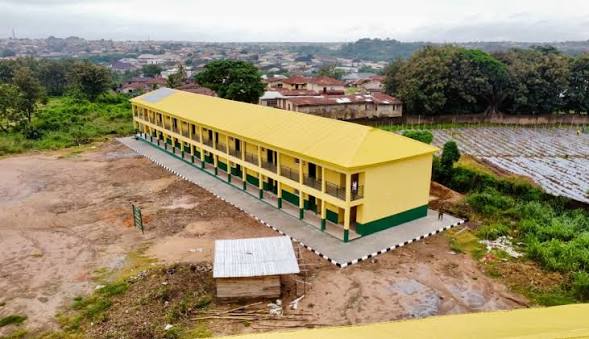
Let us speak truth to power and lay the blame exactly where it belongs: on the lap of political appointees, commissioners, and special advisers who have chosen personal comfort over public duty. These are the policy architects who sit in air-conditioned offices within the Oke-Mosan secretariat, insulated from the heat, dust, and desperation of the state they were hired to serve. They move through our communities behind heavily tinted SUV glass, escorted by blaring sirens and armed security convoys. To them, Ogun State is merely a network of paved expressways connecting government lodge meetings to corporate banquets. They do not roll down their windows to look into the eyes of the young boy carrying a tray of sachet water through Sango traffic at 10:00 AM, nor do they see the young girl in Ifo whose future is quietly slipping into cross-border smuggling or sex work because her local school has no roof, no desks, and no teachers.
When these advisers sit at executive council tables, they choose to nod in agreement rather than present the grim reality. They deliver polished slide presentations and praise-singing briefs, hiding the fact that while they debate administrative allowances, an entire generation of Ogun youth is being groomed by neglect to become tomorrow’s national security threat. When commissioners and advisers abandon rural schools in places like Odeda, Ipokia, and Ogun Waterside, they are not just neglecting buildings; they are actively manufacturing threats to public safety. When government fails as a gatekeeper to unlock potential through basic education, the vacuum is immediately filled by cult recruiters, drug syndicates, and criminal godfathers.
A child who sits on a bare concrete floor in a roofless classroom quickly learns that society has discarded him. When that child eventually drops out, he does not vanish into thin air. His ambition does not die it mutates. The raw intelligence that could have designed aircraft or managed businesses is redirected into street survival, cross-border smuggling, highway robbery, and cult warfare. By refusing to confront the yawning gap between urban promises and rural neglect, the state’s decision-makers are directly feeding the monster that will tomorrow terrorize our communities.
If the decision-makers in Abeokuta attempt to deflect by claiming these threats are distant, they need only watch the heartbreaking footage by a YouTuber Gangster lungu exposed in a documentary short titled “Homelessness & Housing Crisis in Nigeria”.
Look closely into the video at the small, fragile boy sitting under a damp concrete bridge, his hollow eyes clouded by exposure and hunger instead of the wonder of a classroom. When asked what he ate, he points to a dirty container of leftover dry rice; he has no shoes, no uniform, no books, and his bed is a piece of flattened cardboard on freezing concrete. To survive the cold nights and swarms of mosquitoes under the bridge, he rubs cheap mosquito cream onto his shivering arms.
When asked where his parents are, the silence cuts deeper than the answer would. He speaks casually of watching friends crushed by cars on the expressway while fleeing police raids, or swallowed by hard drugs and violent theft to numb an empty stomach. It is impossible to watch that child without tears welling. But behind those tears must come a chilling realization: that boy is being weaponized by neglect. Every night on concrete hardens his heart against society; every meal scavenged from trash feeds a bitterness against a country that abandoned him. In a few years, he will not be asking for help he will be taking what he believes society owes him, at gunpoint.
The default defense from government apologists will be swift: “That bridge is in Lagos, not Ogun State.” To think that way is to indulge in a dangerous, foolish illusion. Lagos and Ogun are separated by nothing more than an invisible line on a map. Sango-Ota, Ifo, Ojodu-Berger, Mowe, and Ibafo do not exist in isolation; they are fluid, interconnected veins. The child who is forced onto the streets of Lagos under a bridge today is the same young man who walks back into Ogun State tomorrow when the street hardens him into a hardened criminal.
When a child in Ogun drops out of a broken school in Odeda or Ipokia as highlighted also in KIZITO a YouTuber street documentary “The Part Of Ogun State They Don’t Want You to See Inside Sango/Ifo” where does he go? He migrates straight to those bridges. And when the street completely strips him of his humanity, he returns to the border towns of Ogun State as a cultist, an armed robber, or a syndicate enforcer.
Crime knows no state borders. The neglected street child sleeping on cardboard in Lagos today will be the leader of the armed gang breaking through the fortified gates of a suburban Ogun estate tomorrow.