



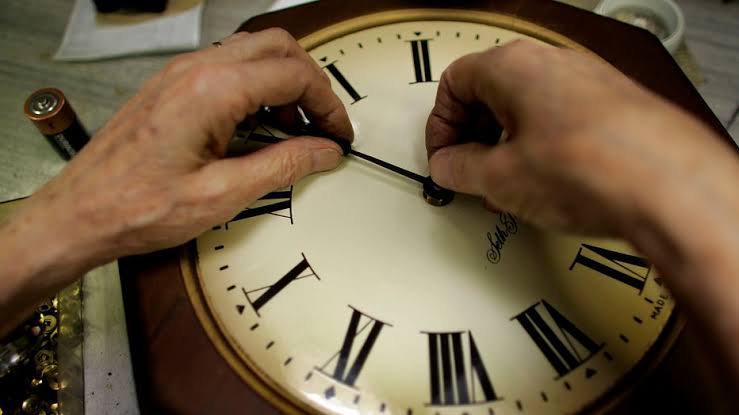
The twice-yearly ritual of changing clocks in the United States could soon become history as lawmakers push legislation that would make daylight saving time permanent across the country.
The U.S. House of Representatives has overwhelmingly approved a bill that would end the practice of moving clocks forward in the spring and back in the fall, replacing it with year-round daylight saving time. The proposal now awaits consideration in the Senate before it can be sent to President Donald Trump for approval.
If enacted, the legislation would eliminate the semi-annual clock changes that many Americans consider inconvenient. An AP-NORC poll conducted last year found that only 12 percent of U.S. adults support the current system, while nearly half oppose it.
Supporters of permanent daylight saving time argue that eliminating the time changes would provide consistency throughout the year. The proposal has received backing from organizations including the American Medical Association and the American Academy of Sleep Medicine, both of which have emphasized the importance of stable daily routines.
President Trump has also indicated his support for ending the twice-yearly clock changes.
However, experts caution that permanently adopting daylight saving time may create new challenges, particularly during the winter months when daylight hours are already limited.
The United States experimented with permanent daylight saving time in the 1970s following the passage of a law in 1973. The measure was introduced as a temporary trial from January 1974 to April 1975 but was repealed in October 1974 after widespread public criticism.
One of the biggest concerns was that children were forced to travel to school in darkness during winter mornings, raising safety concerns. Although many schools now begin classes later than they did in the 1970s, some experts believe similar issues could still arise.
Kevin Birth, a professor of anthropology at Queens College who studies cultural concepts of time, recalled the previous experiment from his childhood in Syracuse, New York.
“I had to get up for school and it was like it was midnight,” Birth said. “It was just pitch black and it remained pitch black into the school day.”
Birth also argued that if the United States adopts permanent daylight saving time again, broader reforms may be necessary. He said the country’s existing four time zones cover vast geographical areas, resulting in significant differences in sunrise times between the eastern and western parts of each zone.
Advances in remote work and new research into sleep science have reignited the debate over whether the United States is better prepared for permanent daylight saving time than it was five decades ago.
The legislation’s future now depends on the Senate, where lawmakers will decide whether to send the bill to the president’s desk and potentially bring an end to one of America’s longest-running seasonal routines.