



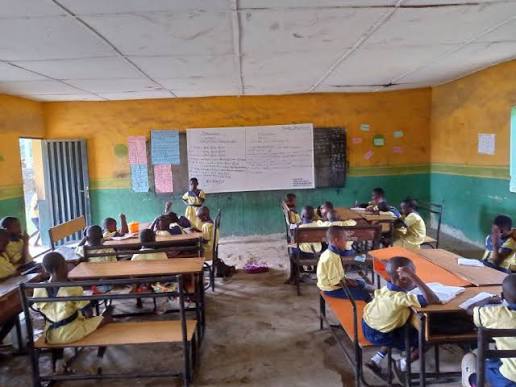
In England and Wales, a person who is cruel to a dog can be jailed for up to five years. In Ogun State, a child can be left to beg at a junction, sleep under a bridge or drop out of school, and no one answers for it. That contrast raises a hard deep question: does an Ogun child have a chance beside a European pet? The question is deliberately blunt, but it is not meant to demean anyone. It is meant to hold up the standard of care a society sets for its pets against the one it sets for its children, and to ask leadership which of the two it is willing to defend.
Start with Europe, where the law takes the dog seriously. The Animal Welfare (Sentencing) Act 2021 raised the maximum prison term for animal cruelty in England and Wales to five years. Across much of the continent, animal-welfare statutes require owners to provide food, shelter, veterinary care and humane treatment. An owner who starves a dog, chains it in the cold or leaves it to die of a treatable illness can lose the animal, pay a fine and be taken to court. Nobody in those countries calls this madness. They call it civilization, and I am not mocking it. A society should be judged by how it treats those who cannot defend themselves. My quarrel is with where we have drawn the line.
Now turn to home. Nigeria still has one of the world’s largest populations of children out of school. UNICEF’s 2025 Annual Report puts the figure at 10.2 million, a more recent figure than the older estimates that placed the number above 18 million. A large share of the children excluded from education live in circumstances that expose them to poverty, exploitation and street life. Many are hawkers at traffic lights, children sleeping under bridges, children whose only classroom is the street. On paper, the protection is generous. The Child Rights Act and the Universal Basic Education Act promise free and compulsory basic education. In practice, no one is jailed simply because a child has been left to lose his future to neglect, because we have not built an enforcement system that treats such failures with the seriousness they deserve. A European can lose his freedom for starving a dog. Who in Ogun has faced the law for starving a child’s future?
The insecurity makes it worse. Across Nigeria, children are abducted from schools and roads, and parents in many communities now weigh the cost of sending a child to class against the fear that the child will not come back. Meanwhile, the world is racing ahead with ICT, artificial intelligence and innovation, and our children are not being prepared for any of it. Many of them have no safe classroom, no steady electricity and no teacher who has seen a computer. We speak proudly of the future, but we have not built a path for these children to reach it.
If anyone thinks I exaggerate the contempt, I invite them to listen to Seun Kuti. In a 2020 interview with The Sun Nigeria, Kuti spoke about the hardship surrounding his restaurant during the COVID-19 lockdown and how the restaurant had become a source of livelihood for him. There is also a widely circulated account attributed to him about hungry children being treated with less consideration than people’s pets. I would be careful, however, about presenting the specific seaside-restaurant anecdote as a verbatim account from a particular program without the original recording or transcript to establish it.
For that reason, I would not attach the anecdote to Anthony Bourdain: Parts Unknown as though it were verified there. The relevant Lagos program featuring Seun Kuti is Season 10, Episode 3, “Lagos, Nigeria”, but that does not by itself establish that the restaurant story was told in that episode. Whether we accept every detail of the story or not, the point stands. When a society trains its comfortable class to see its poor children as a nuisance, the cruelty stops being an accident. It becomes a habit.
So, I ask again, and I mean it as a real question and not a slogan. When we see videos of children sleeping under a bridge, hawking in the sun, begging at junctions, and the state is nowhere in sight, does an Ogun child have a chance even beside a European dog? Perhaps the comparison is too narrow, and we should widen it. The European dog has a vaccination record, a veterinary clinic, a regulated diet, a legal guardian who can be prosecuted for neglect, and an inspector who can knock on the door. The Ogun child often has none of these. Quality of healthcare, quality of exposure, and the simple observance of rights are all missing from his life. I know the question is harsh, and I chose it for that reason. The harshness is borrowed from a reality we have tolerated for years.
If no one will challenge the comparison, then we must ask whether it is an argument we could win, or even pass. I fear that in a fair debate, with the facts laid out, we would lose it. And if we cannot win it, then leadership has a duty to change the facts: enforce the child-rights laws we already have, penalize those who exploit and abandon children, secure the schools, and fund the classrooms. Let us make it as unthinkable to neglect a child in Ogun State as it is to starve a dog in London.