



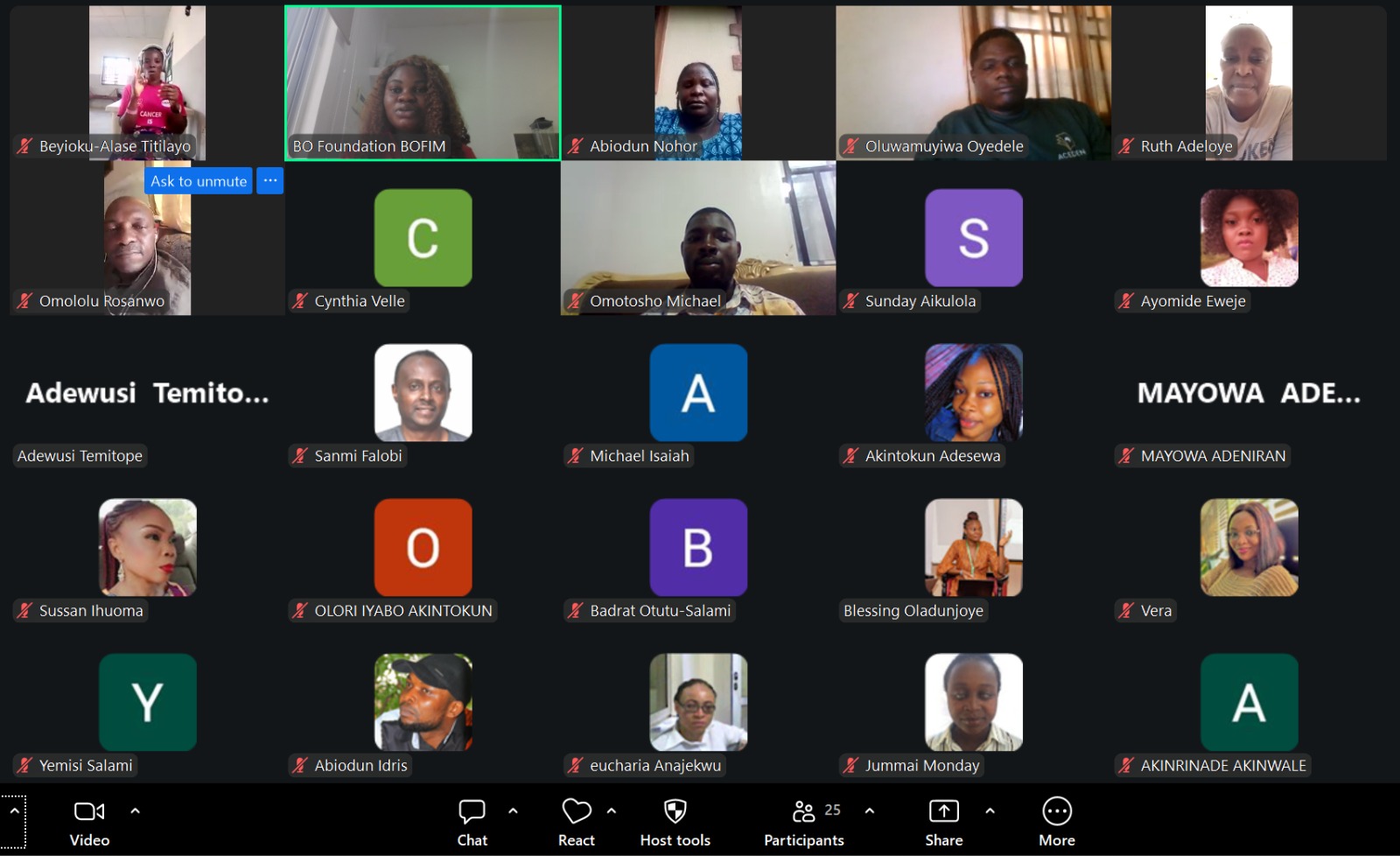
A new report on the participation of women with disabilities in the 2026 Osun State governorship election has called on the Independent National Electoral Commission (INEC) to make polling units physically accessible and provide appropriate assistive voting materials ahead of the 2027 general election.
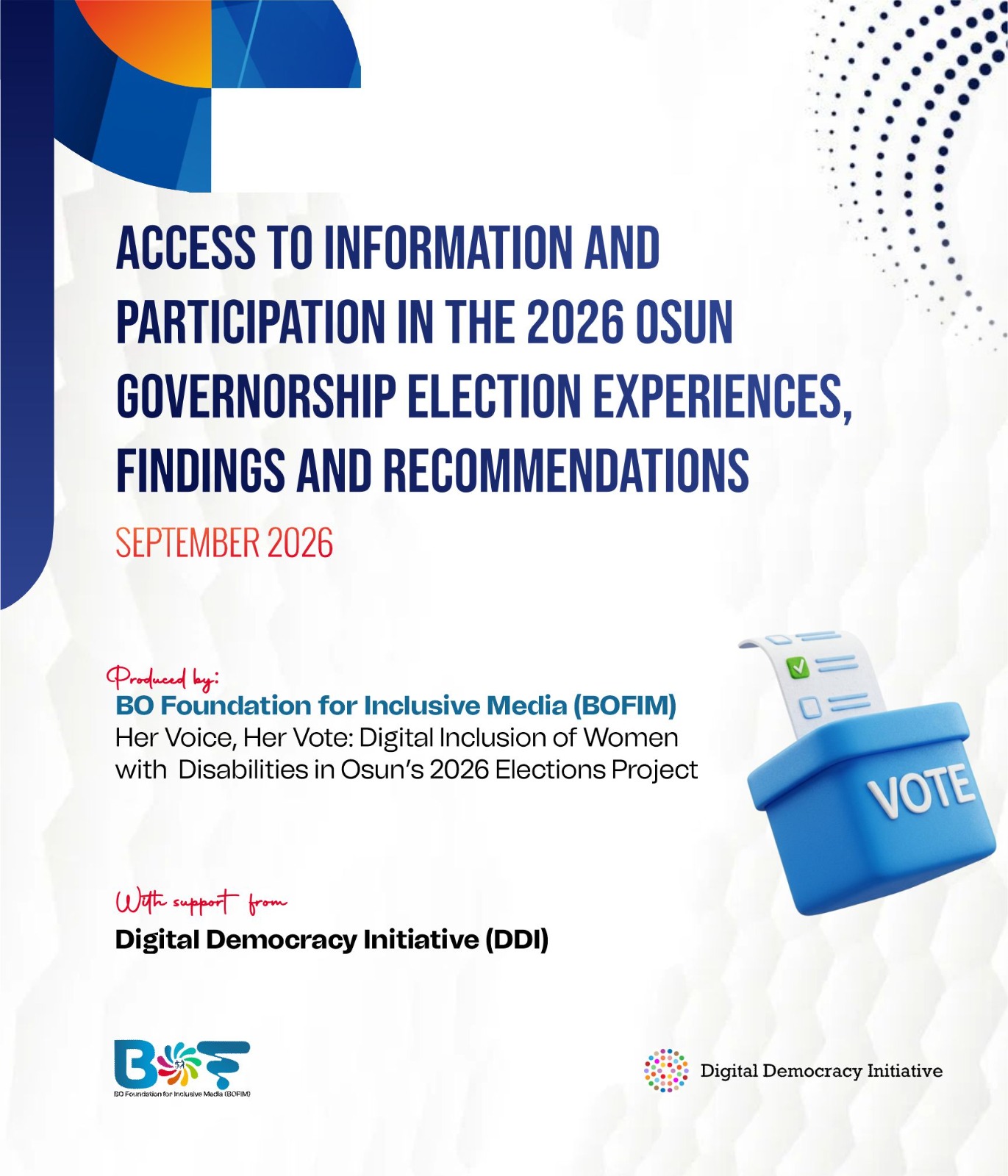
The report, titled “Access to Information and Participation in 2026 Osun State’s Governorship Election,” was produced by BOFIM under its “Our Voice, Our Vote” project, supported by the Digital Democracy Initiative.
The report examined the experiences of women with disabilities in accessing electoral information and participating in the governorship election, with particular attention to digital inclusion and accessibility.
Speaking at the report launch, Mrs Susan Ioma of the Joint National Association of Persons with Disabilities (JONAPWD) stressed that political participation is a fundamental right that must be enjoyed by every citizen, including women and persons with disabilities.
She called for an electoral system that goes beyond merely allowing persons with disabilities to vote, insisting that they must have meaningful and equal opportunities to participate throughout the electoral process.
As part of the project, the team engaged 30 women with disabilities across different disability clusters in Osun State through WhatsApp. Electoral information was provided in different accessible formats, including plain text, graphics, audio messages and videos.
The engagement covered issues including voting rights, voting procedures and misinformation during the election period.
The report found that plain text messages were the most appreciated format among participants, while other formats helped address the different communication needs of women across disability groups.
The meeting also featured the screening of videos produced by women with disabilities, in which they outlined their demands for a more accessible electoral system. Their demands included accessible voting arrangements, better communication support and the right to participate in elections without discrimination.
Consultant Oluwakemi Odusoya, who worked on the production of the videos, highlighted the importance of access to information in enabling women with disabilities to participate confidently in elections.
She said disability rights should be treated as human rights and urged political parties, INEC and other election stakeholders to ensure that the electoral process was accessible to persons with disabilities.
The report identified some improvements in electoral accessibility but also highlighted persistent challenges, particularly physical barriers at polling locations and inadequate communication support.
It noted that polling units with stairs, difficult entrances, narrow access points and other physical barriers can prevent persons with disabilities from independently accessing voting locations.
The report therefore recommended that INEC assess polling locations before election day and relocate polling units with significant accessibility barriers or provide appropriate alternatives.
It also recommended that voting cubicles be positioned at accessible locations rather than across gutters or at elevated points that could create additional difficulties for voters with disabilities.
On assistive voting materials, the report called for Braille ballot guides, magnifying glasses, reading guides and other appropriate devices to be available at polling units where required.
It further recommended that the availability of such materials be verified before voting begins and that a clear mechanism be established for reporting and addressing cases where assistive devices are unavailable.
The report also called for stronger sign-language and communication support for Deaf voters, stressing that they should not be expected to navigate the electoral process without adequate assistance.
According to the recommendations, election information and instructions should be provided in formats that can be understood by voters with different disabilities.
The report further urged INEC to make priority voting arrangements clearer and more consistent at polling units.
It said priority voting should continue because it provides important support for persons with disabilities, elderly voters and other eligible groups who may experience difficulties with long queues and prolonged waiting.
However, it called for better public awareness to ensure other voters understand that priority voting is a rights-based accessibility measure rather than preferential treatment.
For civil society organisations and organisations of persons with disabilities, the report recommended the establishment of mechanisms for real-time reporting of accessibility barriers on election day.
Such mechanisms, it said, should allow voters to report inaccessible polling units, missing assistive materials, communication barriers and discriminatory practices, with cases documented and referred to relevant electoral authorities for immediate intervention.
The meeting also featured a presentation by Michael on digital accessibility, which highlighted gaps that continue to prevent women with disabilities from accessing electoral information online.
Participants stressed the importance of ensuring that electoral information is available through multiple accessible channels rather than relying on a single communication format.
The discussions further emphasised that inclusion must extend beyond election day to voter registration, access to political information, engagement with political parties and meaningful representation in political processes.
BOFIM said it would share the report and its recommendations with participants and publish it on its platforms as part of efforts to broaden awareness of the challenges facing women with disabilities during elections.
The organisation also plans to engage INEC and other stakeholders on the findings, while exploring partnerships with JONAPWD and other disability-focused organisations to strengthen advocacy.
Participants further called for the report’s visual presentation and infographics to be improved to make the findings more accessible and effective for advocacy.
With the 2027 general election approaching, the organisers said the immediate priority would be to amplify the report’s findings and advocacy demands while engaging electoral authorities and other stakeholders to translate the recommendations into practical measures.
The meeting underscored the need for electoral accessibility to be treated as a basic requirement rather than an afterthought, with stakeholders urging INEC and other election actors to ensure that persons with disabilities can access information, reach polling units and cast their votes independently and with dignity.